非洲狮子事实:游猎前你需要了解的一切
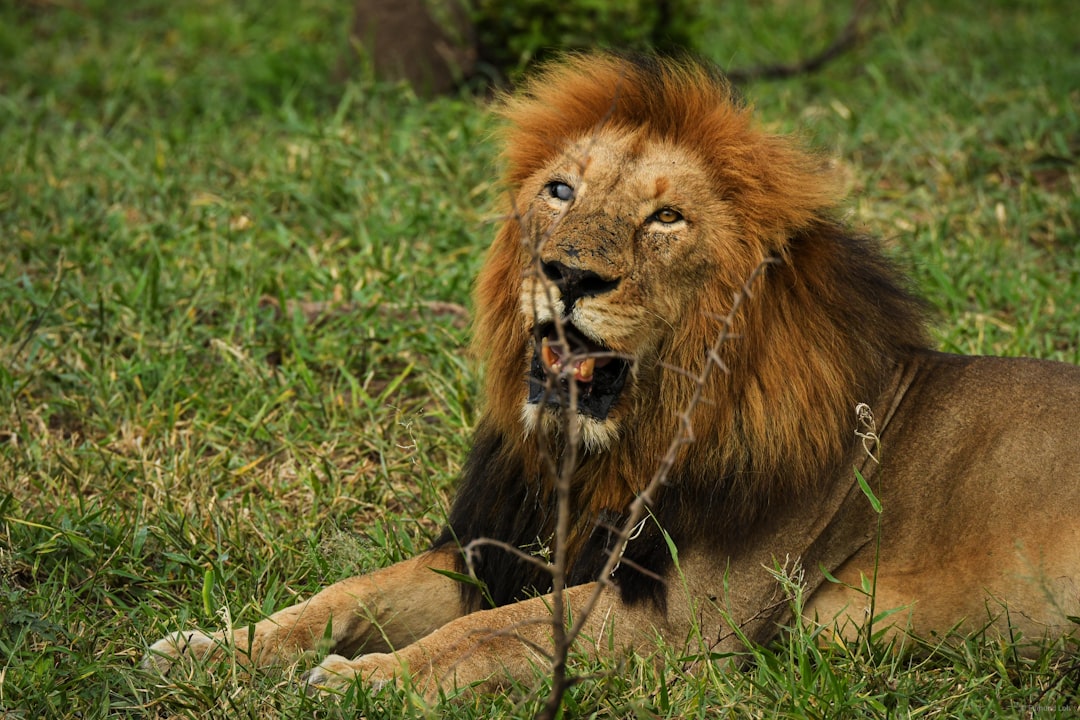
African lions are the only truly social big cats, living in prides of 3–40 individuals. Lions sleep 18–20 hours daily and are most active at dawn and dusk. Tanzania hosts approximately 8,000 lions — nearly 40% of Africa's remaining wild population — concentrated in the Serengeti ecosystem, Selous, and Ruaha. Classified as Vulnerable (IUCN).
The African lion is the reason most people come to the Serengeti. Few wildlife encounters match the first time you watch a lion pride at rest in the golden afternoon light, or hear the deep rolling boom of a territorial roar at 3am in the Serengeti dark. But how much do you actually know about these animals? This guide covers everything from basic biology to the question every first-time safari visitor quietly wonders: do lions actually attack people?
African Lion Quick Facts
| Fact | Detail |
|---|---|
| Scientific name | Panthera leo |
| Weight (male) | 160–190 kg (350–420 lbs) |
| Weight (female) | 110–140 kg (240–310 lbs) |
| Length (body) | 1.7–2.5 m (male), 1.4–1.8 m (female) |
| Shoulder height | Up to 1.2 m (4 ft) |
| Top running speed | 80 km/h (50 mph) in short bursts |
| Jumping ability | Up to 3.7 m (12 ft) horizontally, 1.8 m (6 ft) vertically |
| Lifespan (wild) | 12–16 years (female); 8–12 years (male) |
| Lifespan (captivity) | Up to 25 years |
| Gestation period | 110 days |
| Litter size | 2–4 cubs |
| Range | Sub-Saharan Africa; small population in Gir Forest, India |
| IUCN status | Vulnerable (population declining) |
| African population | Approximately 20,000–25,000 (down from 200,000+ in 1950) |
| Tanzania lion population | Approximately 8,000–10,000 — largest in Africa |
Where Do Lions Live?
African lions live in savanna grasslands, open woodlands, and scrublands. They need large territories with adequate prey, water, and cover. They are the most social of all cats — living in groups called prides — and this social structure requires space. A typical pride territory covers 20–400 km², depending on prey availability.
Tanzania is the most important country for lion conservation in Africa. Approximately 40% of all African lions live in Tanzania, with the Serengeti ecosystem — which crosses into Kenya's Masai Mara — holding one of the highest densities. Ngorongoro Crater has one of Africa's densest lion populations: approximately 60–70 lions permanently resident in a 260 km² caldera, meaning you are virtually guaranteed to see lions on a crater floor game drive.
Best places to see lions in Tanzania:
- Ngorongoro Crater — Highest lion density in Africa; virtually guaranteed sighting
- Serengeti (Seronera area) — Multiple prides in the central corridor; year-round
- Serengeti (northern, Kogatende) — Large prides follow migration herds July–October
- Tarangire — Good populations in dry season when prey is concentrated
- Ruaha National Park — Largest lion population in one park in Africa
Lion Social Structure: How Prides Work
Lions are the only truly social cats. A pride typically consists of 5–15 individuals: a core of 2–8 related females, their cubs, and 1–4 males (often brothers) who hold territorial rights. The females are the heart of the pride — they are often sisters, cousins, or mothers and daughters, and they remain together for life. Males rotate in and out as rival coalitions compete for pride takeover.
Male coalitions: Male lions form coalitions (usually brothers) to hold territories. Larger coalitions hold territories longer and raise more cubs to adulthood. The famous Notch coalition in the Serengeti — five brothers — was one of the most successful on record, holding territory for years and fathering dozens of cubs.
Infanticide: When a new male coalition takes over a pride, they kill the previous males' cubs. This is not cruelty — it is evolutionary strategy. The females return to oestrus within weeks of losing cubs, allowing the new males to father their own offspring immediately. This is one of the most documented and sobering wildlife behaviours seen in Tanzania.
Female coalitions: Lionesses hunt cooperatively. They use coordinated ambush strategies — splitting into flanking and ambush positions — to take prey much larger than any individual could manage alone. A pride can cooperatively bring down a buffalo weighing 700+ kg.
What Do Lions Eat?
Lions are apex predators eating large to medium ungulates: wildebeest, zebra, buffalo, impala, warthog, and giraffe. In the Serengeti, wildebeest and zebra are the dietary staples. A lion eats roughly 5–7 kg of meat per day on average, though they can consume up to 30–40 kg in a single feast and then go days without eating.
Hunting facts:
- Lionesses do approximately 90% of the hunting; males are significantly less efficient
- Success rate on hunts: approximately 25–30% (lions fail more often than they succeed)
- Lions hunt most actively at dawn, dusk, and at night — when reduced visibility gives them advantage
- They are stalkers, not chasers — typically approaching within 30m of prey before the final sprint
- Lions frequently steal kills from cheetahs, wild dogs, and hyenas (kleptoparasitism)
- Despite the stereotype, hyenas often hunt successfully and lions steal from them — not always the other way
Do Lions Attack Humans?
This is the question most safari visitors privately wonder. The honest answer is: yes, lions attack humans, but rarely in a tourist safari context.
Lions killed approximately 250 people per year in Tanzania between 1990 and 2005 — one of the highest rates in Africa — primarily in rural farming communities adjacent to parks. The attacks concentrated in specific areas around Rufiji in southern Tanzania, where lion habitat and farming areas overlap and lions had learned to associate human settlements with prey.
However, lion attacks on safari tourists are extremely rare. In over 50 years of modern safari tourism in Tanzania — millions of visitors annually — there have been very few documented attacks on tourists in vehicles. The reasons:
- Lions generally do not perceive vehicles as prey or threat — they have been conditioned to accept the presence of safari vehicles over generations
- The vehicle is an enclosed, elevated structure — lions do not typically approach what they perceive as a single, large organism
- Professional guides know the warning signs of agitated lions and maintain safe distances
- Night walking (when lions are most active and dangerous) is prohibited in national parks
The risk profile for a safari tourist is fundamentally different from a rural farmer sleeping in a thatched-roof home adjacent to lion territory. Following your guide's instructions is the complete risk mitigation strategy — never get out of the vehicle unless explicitly told it is safe, and never enter a national park on foot without an armed guide.
Why Are Lions Endangered? The Conservation Reality
The African lion is classified as Vulnerable by the IUCN, and the situation is deteriorating. An estimated 200,000 lions lived in Africa in the mid-20th century. Today, the population is below 25,000 — a decline of over 85% in 75 years. If this trajectory continues, wild lion populations outside protected areas could collapse within decades.
Primary threats:
- Habitat loss: Savanna grasslands converted to agriculture is the primary driver. As human populations expand around parks, wildlife corridors are severed and lion territories shrink.
- Human-wildlife conflict: Lions preying on livestock — particularly during drought years when wild prey is scarce — triggers retaliatory killing. A single lion killing livestock can be worth thousands of dollars per year in lost income to a farming family.
- Prey base depletion: Bushmeat poaching reduces the prey base (wildebeest, impala, zebra), making lions hungrier and more likely to turn to livestock.
- Trophy hunting: Legal trophy hunting continues in Tanzania's game reserves. Its net impact on conservation is vigorously debated — some argue fees fund anti-poaching; others that removal of dominant males destabilises prides and accelerates decline.
- Disease: Canine distemper (spread by domestic dogs in areas bordering parks) and bovine tuberculosis (from buffalo) have caused significant die-offs, including a major Serengeti die-off in 1994.
Tanzania is the world's most important country for lion conservation simply because it holds the most lions and some of the most intact habitat. The Serengeti-Mara ecosystem, the Ruaha-Katavi ecosystem, and the Selous-Niassa corridor are the three most critical lion landscapes on Earth. Responsible tourism — where safari revenue funds park management and creates economic incentives for communities to protect wildlife — is one of the most effective lion conservation tools available.
Lion Cubs: The First Year
Lionesses give birth to 2–4 cubs after a 110-day gestation, typically in dense cover away from the pride. Cubs are born blind and helpless, weighing just 1.5 kg. The first 6–8 weeks are spent in hiding. Cub mortality is high — approximately 60% of cubs die in their first year from starvation, predation (hyenas, leopards, and crocodiles take cubs), and infanticide.
Cubs begin eating meat at around 3 months but nurse until 6–7 months. They begin participating in hunts at 11 months and are fully independent by 2–3 years. Young males are expelled from the pride at 2–4 years and spend a dangerous nomadic period alone or with brothers before establishing their own territory.
Identifying Lions: Mane, Scars, Whisker Spots
Experienced guides can identify individual lions — especially males — by their physical characteristics:
- Whisker spot patterns: The rows of spots above the lip are unique to each individual, like a fingerprint. Researchers use these for long-term population studies.
- Mane colour and coverage: Varies by individual and age. Darker, fuller manes indicate genetic quality and dominance — lionesses preferentially mate with darker-maned males. Mane colour also responds to testosterone levels.
- Ear notches and scars: Fight scars, particularly ear notches from territorial battles, are unique to individuals. Your guide can often identify specific named lions that researchers have studied for years.
- Tail tuft: The dark tuft at the end of a lion's tail conceals a small spine — its function is debated but it may be used in social communication.
In the Serengeti, many prides have been tracked by researchers for decades. When your guide tells you this is "the Seronera 7 pride" or names a particular male, he is drawing on real research history — not fiction.
The Lion's Roar: Facts and Function
The lion's roar is one of the most extraordinary sounds in nature. It can be heard from 8 kilometres away on a still night. A full roar sequence consists of several deep moaning coughs followed by full-voiced roars, typically repeated 5–20 times. The full sequence can last 40 seconds.
Functions of roaring:
- Territory advertisement — warning rival prides and males to stay away
- Group cohesion — prides call to locate each other across large territories
- Social bonding — lions often roar chorally as a pride, reinforcing group identity
Roaring is most frequent at night and around dawn. Hearing a pride roar from your tent at 4am in the Serengeti is one of Africa's most memorable experiences — viscerally primordial and impossible to forget.
Interested in seeing lions in the wild? View our Tanzania safari packages or contact our Arusha team for personalised advice on the best areas and timing for lion sightings.