What Does a Mid-Range Tanzania Safari Actually Cost? (Honest 2026 Breakdown)
"Mid-range" is the most misunderstood label in Tanzania safari pricing. Travelers arrive at the term from a hotel industry context where mid-range means $100–200 per night, apply that expectation to safari, and then feel misled when they find out what mid-range actually costs in East Africa. This guide cuts through the confusion. We will break down exactly what you get at $200, $300, and $450 per person per night — with real lodges, real inclusions, and the hidden extras that nobody warns you about until your invoice arrives. We run safaris from Arusha. These are real numbers from 2026 itineraries, not estimates from a desk somewhere else.
What "Mid-Range" Actually Means in Tanzania
The industry definition of mid-range safari in Tanzania sits at roughly $200–500 per person per night, and that figure is meant to be all-inclusive: accommodation, all meals, twice-daily game drives, a private vehicle, a dedicated guide, and park entry fees in most packages. That is a very different product from a $200 hotel room in a city.
The reason the number seems high is that it is bundling things that in other travel contexts you pay for separately. Your accommodation, your transport, your guide, your food, your park access — all in one daily rate. When you unbundle it and look at what those components cost individually, the mid-range rate starts to make sense.
What the per-person-per-night rate typically does include at mid-range:
- Accommodation (lodge room or tented camp)
- All meals (breakfast, lunch — often a packed crater or bush lunch — and dinner)
- Twice-daily game drives, morning and afternoon
- Private 4WD safari vehicle (at true mid-range — more on this below)
- Dedicated professional driver-guide
- National park entry fees in most packages (always verify this)
- Water with meals; tea and coffee
What it typically does not include:
- International flights to Tanzania
- Travel insurance
- Optional activities: balloon safari ($599–650 per person), walking safari fees, cultural village visits
- Gratuities — the industry standard is $10–20 per person per day for your guide and $5–10 per day for camp staff
- Airport transfers, which are often listed separately at $50–150 each way
- Alcoholic drinks at the lower end of mid-range; house wines and local beer are usually included from the $250ppn tier upward
- Laundry at budget-to-mid properties
- Ngorongoro Conservation Area staying fees if you sleep inside the NCA ($80 per person per night — see below)
The $150–220 per Person per Night Tier — Comfortable Budget-to-Mid
This is the entry point of the mid-range category, and it is more capable than most travelers expect. At this price point you are looking at solid permanent lodges or tented camps with en-suite bathrooms, reliable hot water, good buffet or set-menu meals, and properties that have been running safari operations long enough to have competent staff and reliable logistics.
Real properties that sit in this tier in 2026:
- Seronera Wildlife Lodge — inside the central Serengeti, TANAPA-operated, with a swimming pool and a position in the heart of the park's best year-round game viewing territory. The rooms are functional rather than luxurious but the location is excellent.
- Tarangire Sopa Lodge — sits within the Tarangire National Park boundary, good views over the park landscape, pool, buffet meals. Reliable and well-established.
- Bougainvillea Safari Lodge, Karatu — the standard mid-range choice for the Ngorongoro circuit, 32 stone cottages in lush gardens, consistently used by tour operators because it is consistently good.
- Serengeti Sopa Lodge — a large lodge in the Serengeti with pool and reliable buffet meals, popular with groups and families.
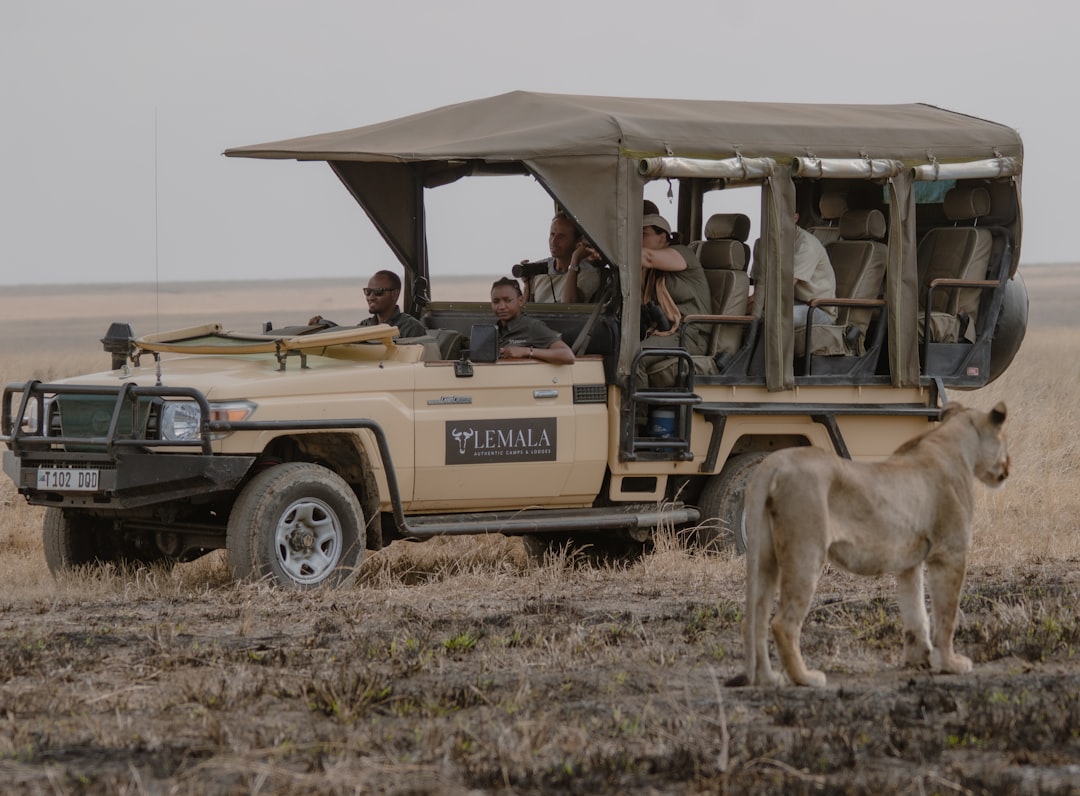
At this tier, vehicles are sometimes shared — particularly in group-tour packages — with up to four to six passengers in one vehicle. Some operators do offer private vehicles at this price point, particularly for couples, but it is not automatic. Ask specifically.
The honest and important truth about this tier: you will see exactly the same wildlife as someone paying $1,000 per person per night. Lions, elephants, leopards, and the Great Migration do not operate differently based on your accommodation rate. The difference between a $200ppn safari and a $1,000ppn safari is not the wildlife — it is the vehicle comfort, dining experience, accommodation quality, guide specialization, and camp exclusivity.
The $250–380 per Person per Night Tier — The True Mid-Range Sweet Spot
This is where the mid-range product genuinely comes together, and it is the tier we most often recommend to travelers who want a complete safari experience without paying luxury prices. At $250–380ppn you typically get a private vehicle with a dedicated guide, all meals with house drinks included, and properties that are inside or directly adjacent to national parks.
Real properties in this tier:
- Tarangire Safari Lodge — perched on a bluff above the Tarangire River with baobab trees around the camp and excellent views of the river and surrounding bush. One of the most attractive mid-range camps in the northern circuit.
- Ngorongoro Serena Safari Lodge — sits on the crater rim inside the NCA. Note: add NCA staying fees on top of the room rate. The lodge itself is at the upper mid-range quality level.
- Maramboi Tented Lodge — positioned in a wildlife management area between Tarangire and Lake Manyara, excellent for a transition night and good birding.
- Kati Kati Tented Camp — a mobile-style tented camp in the central Serengeti, well-positioned for year-round wildlife, smaller and more intimate than the big lodge properties.
The single most important upgrade between the $150–220 tier and this tier is the private vehicle with a dedicated guide. This changes the safari experience in ways that are hard to overstate. You control when you leave in the morning. You decide how long you stay with a leopard sighting. Your guide is focused entirely on your group — not managing five passengers with different attention spans and interests. When you are at a cheetah kill and want to stay for an hour, you stay for an hour.
Here is a realistic inclusions breakdown for a $300ppn package from a reputable Arusha operator:
| Inclusion | What You Get | Included? |
|---|---|---|
| Accommodation | En-suite lodge room or tented camp | Yes |
| Meals | Breakfast, lunch (packed or bush), dinner | Yes |
| Vehicle | Private 4WD Land Cruiser or equivalent | Yes |
| Guide | Dedicated professional driver-guide | Yes |
| Park fees | National park entry fees | Usually yes — verify |
| Drinks | House wines, local beer, soft drinks | Yes (from $250ppn tier) |
| Laundry | Daily laundry service | Often yes |
| Tips | Guide and camp staff gratuities | No — budget separately |
| Balloon safari | Serengeti hot air balloon at dawn | No — $599–650 per person extra |
| International flights | Flights to/from Tanzania | No |
The $380–600 per Person per Night Tier — Upper Mid-Range / "Comfort"
This tier is sometimes called "comfort" or "upper mid-range" in operator parlance, and it represents the transition zone between standard mid-range and genuine luxury. At this price point, accommodation upgrades become significant — you are looking at spacious tented suites with private verandas, quality furniture, and genuinely good food rather than good-enough buffet food.
Real properties in this tier in 2026:
- Kubu Kubu Tented Lodge, Serengeti — a well-regarded tented camp in the western corridor of the Serengeti with a strong food reputation and good positioning for river crossings during migration season.
- Lobo Wildlife Lodge, northern Serengeti — a distinctive lodge built into a kopje (granite outcrop) in the north of the park, excellent for the November–December and July calving and crossing periods.
- Ngorongoro Sopa Lodge — on the crater rim inside the NCA, larger than Serena, with good crater views and a pool. Add NCA staying fees.
- The Plantation Lodge, Karatu — arguably better food and atmosphere than most rim lodges at a similar or lower all-in cost when NCA fees are excluded.
- Gibbs Farm, Karatu — farm-to-table dining and highland farm atmosphere at a standard that competes with properties charging considerably more.
The key difference between this tier and the genuinely luxury tier above $700ppn: you are still in a shared camp (other guests are present), private plunge pools are rare, exclusive private conservancy access is uncommon, and the guide-to-guest ratio is lower. What you gain over the $250–380 tier is meaningfully more comfortable accommodation, better food, and properties with more character and better positioning.
This tier makes the most sense on longer trips of seven to ten nights. On a five-day safari, the accommodation is where you sleep and eat — you spend most of your time in the vehicle. On a ten-day itinerary, where you come back to camp twice a day for days on end, the quality of the space you come back to accumulates in importance.
The Hidden Costs Nobody Mentions
These are the charges that appear between the initial quote and the final invoice, or worse, at the park gate when you are already there. Know them before you book.
- NCA conservation fee: $80 per person per night if you are sleeping inside the Ngorongoro Conservation Area. This is charged by the NCA authority and is not optional. It applies to every rim lodge. It does not apply to Karatu lodges outside the NCA boundary.
- Crater descent fee: approximately $200–300 per vehicle per descent into the Ngorongoro Crater. This is separate from the NCA staying fee and is charged each time your vehicle goes down into the crater. If you do two descents across two mornings, you pay twice.
- Balloon safari: $599–650 per person in 2026. This is the most popular optional add-on in the Serengeti and genuinely worth considering, but it is never included in a standard package and the price surprises people who did not budget for it.
- Tips and gratuities: The industry standard for a professional driver-guide is $10–20 per person per day. Camp staff expect $5–10 per person per day collectively. On a seven-day trip for two people, that is $210–420 in tips. This is not in your package price.
- Airport transfers: Transfers between Kilimanjaro International Airport and Arusha, or between Arusha and any domestic airstrip, are frequently listed as separate items. Budget $50–150 each way depending on distance and vehicle type.
- Park gate fees: Most reputable operators include national park entry fees in quoted itinerary prices, but not all do — particularly online booking platforms. Confirm in writing that park fees are included. Serengeti entry is $80 per person per day; Tarangire is $53.10 per person per day; Ngorongoro crater descent is charged by vehicle.
- Mobile data and connectivity: Mobile signal inside national parks is poor to nonexistent. If you need connectivity for work or family, mobile WiFi device rental is available in Arusha for approximately $5–10 per day. Download offline maps and any essential documents before you leave Arusha.
- Domestic flights: Flying between parks (Arusha to Serengeti, Serengeti to Manyara airstrip) costs $150–300 per person per sector. It saves hours of road driving and is worth considering on longer itineraries, but it is always an extra.
Is Mid-Range Worth It Over Budget?
The honest answer is: it depends entirely on which specific upgrades you are paying for. Some upgrades are worth the money. Some are not. Here is our assessment from operating safaris in northern Tanzania.
The private vehicle upgrade is worth every shilling. The difference between a shared vehicle with four to six passengers and a private vehicle with your own group is the single biggest quality-of-life upgrade available in safari. A shared vehicle means shared decisions: when to leave, when to move on from a sighting, how long to stop for lunch. A private vehicle means your guide is working for you alone. You stop when you want. You stay when you want. On a busy morning in the Serengeti when fifteen vehicles are circling a leopard, a private vehicle driver can position differently, wait patiently, and get you the shot that the shared group vehicles rushed past. The cost difference is roughly $60–120 per day. It is worth it.
Camp location matters. Mid-range lodges are more frequently positioned inside or directly adjacent to national parks. Budget accommodation is often outside park boundaries, which means 20–45 minutes of additional driving at each end of every game drive. On a five-day safari, that is potentially three to four hours of gate-driving time you could have spent with animals. Location is real value.
Guide quality is where variance is highest. This is the honest truth that is uncomfortable for any operator to say directly: a $300ppn itinerary with an exceptional guide is a better safari than a $600ppn itinerary with a mediocre one. Guide quality is not perfectly correlated with price tier. When booking, ask about your guide specifically: how many years of experience, what certifications they hold, which parks they know best. A good operator will be able to tell you the name of your guide and their background before you commit. If they cannot, ask why.
Sample 7-Day Mid-Range Northern Circuit Cost — 2026
Based on two passengers, private vehicle, mid-range accommodation in the $250–350ppn tier, booked directly with a local Arusha operator:
| Night | Destination | Accommodation | Approx. Cost (2 pax, total) |
|---|---|---|---|
| Night 1 | Arusha | Pre-safari hotel (not included in safari package) | $100–180 |
| Nights 2–3 | Tarangire National Park | Mid-range tented camp inside park | $1,000–1,400 |
| Nights 4–5 | Central Serengeti | Mid-range tented camp or lodge | $1,200–1,600 |
| Nights 6–7 | Karatu (Ngorongoro area) | Quality Karatu lodge, crater day drive | $900–1,200 |
| Vehicle + guide (6 days) | All parks | Private Land Cruiser, professional guide | $1,800–2,400 |
| Park fees (all parks) | Tarangire, Serengeti, Ngorongoro | Usually included — verify with operator | $800–1,100 (2 pax) |
Estimated total per person for 6 safari days / 7 nights: $3,200–3,800, including accommodation, all meals, vehicle and guide, and park fees. Excluding international flights, travel insurance, tips ($150–280 for two people over six days), and optional activities.
This is the real number. It is not a promotional figure — it is what a properly structured mid-range northern circuit costs from a reputable local operator in 2026 with no hidden extras.
How to Get the Best Value Mid-Range Safari
These are the decisions that meaningfully reduce cost without reducing the experience.
- Travel in April, May, or November: These are shoulder and green season months in Tanzania. April and May are the long rains (the Serengeti is lush and photogenic, the Great Migration is in the south, wildlife density is high, and tourist numbers are low). November is the short rains. Operators offer 20–30% reductions across most mid-range properties in these months. The wildlife viewing is excellent — the grass is shorter after the rains in May than during the dry season peak, and predator activity is high.
- Travel as a group of four: Safari vehicles are priced per vehicle, not per person. A private Land Cruiser comfortably seats six but a group of four is ideal. If you are a couple paying for a private vehicle, you are bearing the full vehicle cost on two people. Four people in the same vehicle cuts the per-person vehicle cost in half. If you are travelling as a couple and budget is a consideration, ask your operator whether they can pair you with another couple in a shared private vehicle — you share costs but still have a smaller, more flexible group than a standard shared tour.
- Book directly with a local Tanzania operator: International booking platforms, travel agents, and safari aggregator websites add their commission to every booking — typically 15–25%. When you book directly with an Arusha-based operator, that margin stays off your invoice. You also communicate directly with the people who will actually run your safari, which means better information and easier customization.
- Ask specifically what "all-inclusive" covers: Every time you compare quotes, use the same list of questions: Are national park fees included? Are NCA staying fees included if we stay in the NCA? Are airport transfers included? What drinks are included? Is laundry included? The answer to each question can shift a quote by $200–500 per person. You cannot compare quotes without knowing what they each actually contain.
- Consider Karatu over crater rim lodges: As detailed in our Karatu lodges guide, staying outside the NCA boundary saves the $80ppn NCA staying fee per person. For a couple spending two nights in the Ngorongoro area, that is a saving of $320 in fees alone, on top of lower lodge rates.
Tanzania is not a destination where cutting corners on a safari operator saves money — it redistributes risk. The saving you make on a cheap operator usually shows up as a worn-out vehicle, a less experienced guide, a camp positioned further from the wildlife, or park fees that appear on a separate invoice when you are already at the gate. Book with operators who can tell you the name of your guide, the condition of their vehicle fleet, and exactly what is and is not included in your quoted price. That transparency is the mark of a reputable local operator.
For a full breakdown of how Tanzania safari costs compare across all budget tiers — from camping to luxury — see our Tanzania safari cost and budget guide. For a direct comparison of budget and luxury safari experiences, see our budget vs luxury Tanzania safari guide. If you are building a longer itinerary, our 10-day Tanzania safari itinerary gives a structured route with real accommodation options at each stop.
Ready to Plan Your Tanzania Adventure?
Our local safari experts in Arusha will craft a personalized itinerary just for you. No obligation, free consultation.
Get Your Free Quote