Tarangire National Park Accommodation Guide: Best Lodges & Camps 2026
Tarangire is Tanzania's most underrated park. During the dry season — roughly July through October — it may host the highest wildlife density of any park on the continent. The Tarangire River becomes the only permanent water source across an enormous stretch of northern Tanzania, and every animal that can reach it does. Herds of 200–300 elephants are not unusual in September. Lions are abundant. The acacia-and-baobab landscape is unlike anything in the Serengeti. And yet Tarangire is frequently treated as a brief half-day stop on the way to Ngorongoro, rather than the multi-night destination it deserves to be. Your accommodation choice here — inside or outside, riverfront or hillside, lodge or tented camp — determines whether you experience the park's full depth or only skim its surface.
Understanding Tarangire's Geography for Accommodation Decisions
The park's entire ecology in dry season is organised around a single feature: the Tarangire River, which runs through the park from south to north and empties into Lake Burunge at the northern boundary. In the dry months, when every other water source has evaporated, wildlife concentrates along this river in extraordinary numbers. The lodge clusters follow the same logic — nearly all standard accommodation sits in the northern section of the park, closest to the entry gate and along or near the riverbanks.
The park extends considerably further south, into remote areas including the Silale swamps and the Lemiyon woodland zone. These southern sections hold wildlife in spectacular densities during the dry season but are genuinely remote — several hours from the main gate by dirt track, inaccessible to standard game drive vehicles in the wet season, and served only by specialist mobile camps that operate seasonally. For the vast majority of travellers on standard northern circuit itineraries, the northern section is the entire park.
At 2,850 square kilometres, Tarangire is considerably smaller than the Serengeti and far more accessible. The main gate is approximately 120 kilometres from Arusha — a comfortable two-hour drive — making it an ideal first park on any northern circuit. One or two nights here is enough for a thorough exploration of the northern section.
Inside the Park — Top Lodges Reviewed
Tarangire Safari Lodge (~$320–480 per person per night)
The oldest and most established lodge in Tarangire, originally built in the 1970s and continuously upgraded since. Thirty-nine rooms and permanent tents occupy an elevated ridge above the Tarangire River, with views across the valley that are among the finest of any lodge in Tanzania. The terrace and pool area face west over the river floodplain — during the dry season, watching elephants drink below the lodge at sundowner time is a near-daily certainty.
The guiding quality at Tarangire Safari Lodge is reliable, the food is good, and the management has maintained the property well through multiple generations of ownership. This is the classic Tarangire experience — mature, well-positioned, and free of the over-engineered luxury that can make some newer camps feel artificial in a bush setting.
Best for: First-time Tarangire visitors, anyone who prioritises river views and reliability, travellers who want the classic camp feel with full amenities.
Tarangire Sopa Lodge (~$260–360 per person per night)
Seventy-five rooms in the Sopa brand's characteristic style — solid, reliable, more hotel-like than tented camp. Sopa consistently delivers what it promises: clean rooms, a working pool, adequate restaurant, and no unpleasant surprises. The position is slightly further from the river than Tarangire Safari Lodge, which reduces some of the terrace wildlife viewing, but the game drive access to the same riverine areas is identical.
Sopa's real advantage is price and capacity. As the largest lodge inside the park, it handles groups and families more comfortably than the smaller camps, and its rates are the most accessible of the inside-park options for travellers on mid-range budgets who still want to sleep within the park boundary.
Best for: Groups, families, budget-conscious travellers who want inside-park accommodation, travellers familiar with the Sopa brand from Serengeti or Ngorongoro.
Baobab Tented Camp (~$280–420 per person per night)
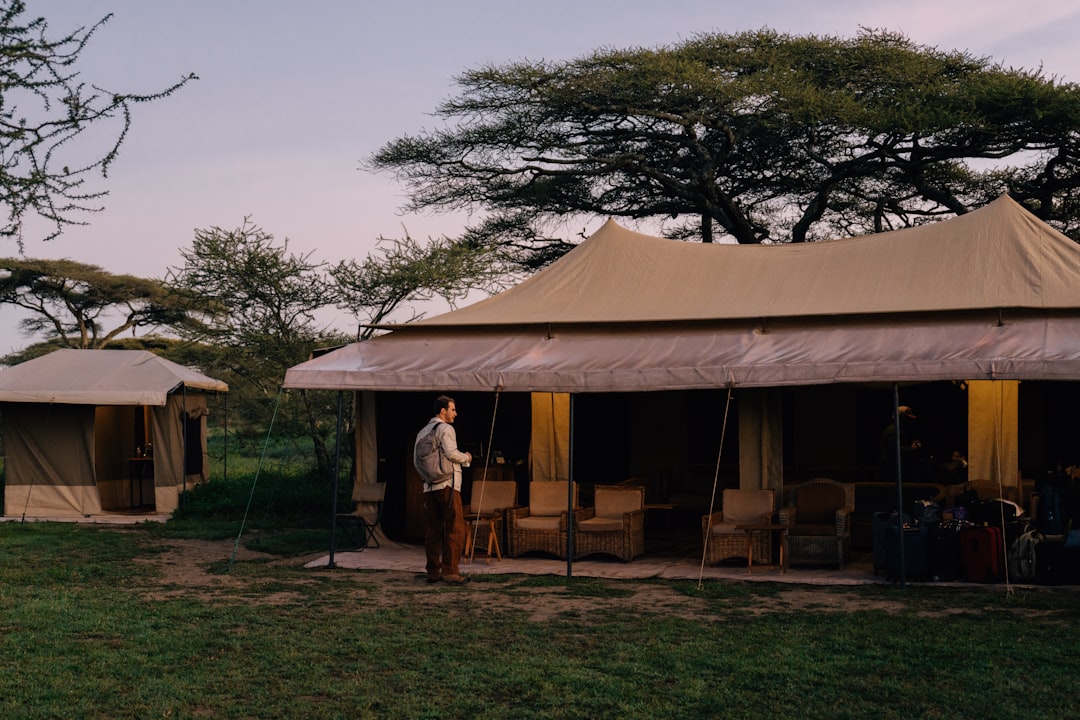
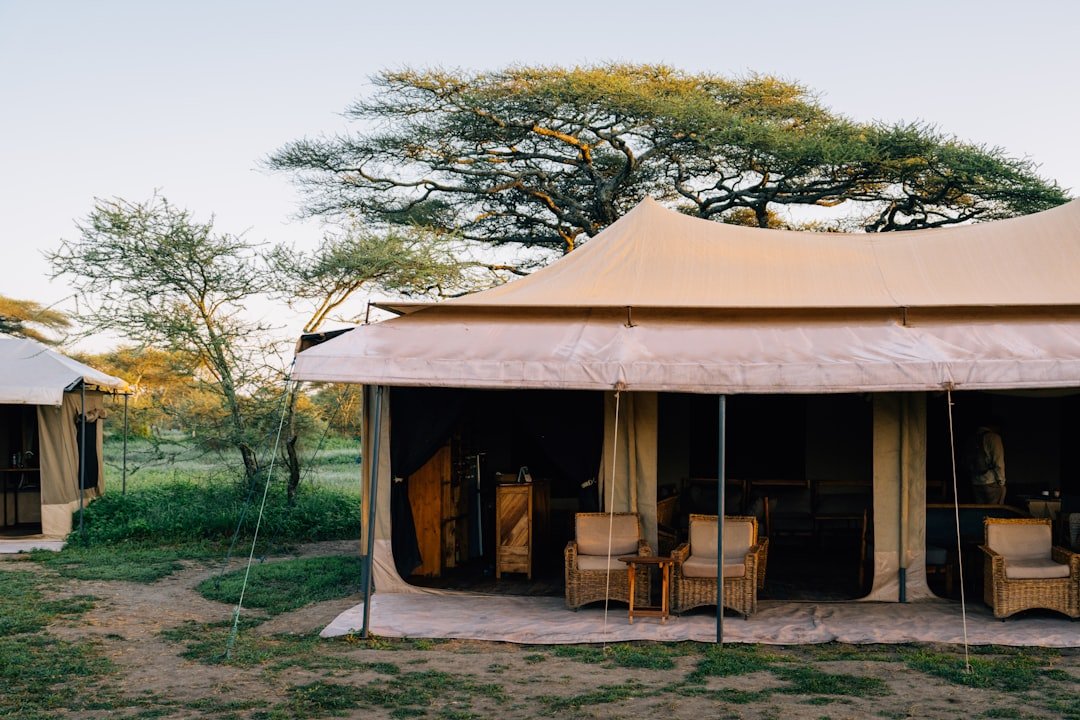
Twenty canvas tents positioned beneath ancient baobab trees in the interior of the park, away from the ridge-top positions of the larger lodges. This is the most atmospherically authentic mid-range camp in Tarangire — the baobab canopy gives the camp a genuinely wild character that the lodges cannot replicate, and the sense of being embedded in the bush rather than elevated above it is distinct and memorable.
En-suite bathrooms in each tent, good meals served in an open mess tent beneath the baobabs, and a small pool. Wildlife sometimes walks directly through camp — elephant and giraffe are common, and one reason the tents have mesh rather than solid walls is precisely to preserve the connection with what moves around you at night. The sounds of the African bush from inside a canvas tent under a baobab have a quality that a hotel room can never provide.
Best for: Travellers who want the authentic bush camp feel without paying luxury prices, photographers who want to work from camp as well as from the vehicle, couples.
Angata Tarangire Camp (~$300–450 per person per night)
Twenty tents in a classic East African style, positioned close to the Tarangire River in the northern section of the park. More intimate than either of the lodges and with an excellent reputation for guiding — Angata's driver-guides consistently receive strong client feedback for their knowledge of Tarangire's wildlife and their willingness to spend time with a sighting rather than rushing to the next one.
The pool is small but functional, the meals are reliably good, and the camp atmosphere is sociable without being crowded. River views from the common areas add meaningfully to the sundowner and evening experience.
Best for: Couples, wildlife enthusiasts who prioritise guiding quality, photography-focused travellers, return visitors who want something more intimate than their previous Tarangire stay.
Oliver's Camp (~$800–1,200 per person per night — Upper Range)
Ten tents on a private concession within the Tarangire ecosystem, Oliver's occupies a different category from the other inside-park camps. The concession's private land status permits two activities that are not available inside the national park boundary: guided walking safaris and night drives. For serious wildlife enthusiasts, these two additions fundamentally change the quality of the experience — walking in elephant country with an expert guide is as formative a wildlife encounter as any vehicle-based game drive, and night drives reveal a cast of characters (porcupine, aardvark, genet, civet, and occasionally leopard) that daytime safari entirely misses.
Specialist guiding standards at Oliver's are among the highest in northern Tanzania, and the camp's management maintains a genuine commitment to low-impact, high-quality operations. We mention it as the aspirational option for Tarangire — it is not accessible for most safari budgets, but clients who have stayed there consistently describe it as a defining experience.
Outside the Park — WMA and Adjacent Camps
Maramboi Tented Lodge (~$300–500 per person per night)
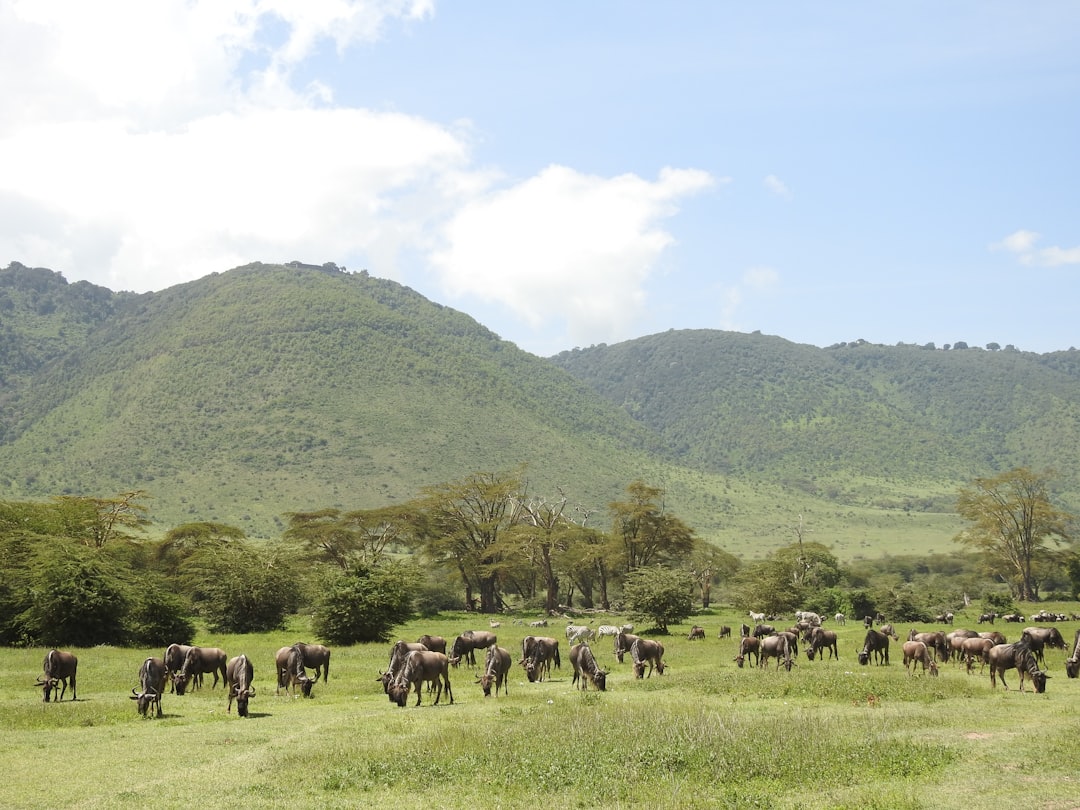
Arguably the best-positioned outside-park lodge in the entire northern circuit. Maramboi sits in the wildlife corridor between Tarangire National Park and Lake Manyara National Park — a broad belt of mixed acacia and open grassland through which animals freely move between the two parks. Elephants cross the Maramboi area at night, buffalo are permanent residents, and the lake shore visible from the lodge provides one of the most photographically spectacular sunsets in Tanzania: flamingos on the water, Kilimanjaro on the horizon on clear days, and the Rift Valley escarpment behind.
Forty tents, a large pool with lake views, productive bird hides along the shoreline (Maramboi is exceptional for birding, with several hundred species recorded), and full walking safaris with Maasai guides operating from camp. Night drives are available here as well — neither walking nor night drives are permitted inside Tarangire National Park itself, making Maramboi's outside-park status an activity advantage rather than a compromise.
The practical flexibility Maramboi offers is considerable: it can serve as a base for game drives into Tarangire (approximately 40 kilometres to the main gate), a substitute for a separate Lake Manyara night, or a standalone wildlife experience in its own right.
Best for: Birdwatchers, photographers, families wanting pool access and space, anyone combining Tarangire and Manyara who wants to consolidate two nights into one excellent base.
Lemala Nanyukie (~$400–650 per person per night)
Twelve tents on a private Wildlife Management Area (WMA) concession, Lemala Nanyukie operates at the more exclusive end of the outside-park spectrum. Exclusive-use booking is possible for groups or couples wanting complete privacy. Walking safaris and night drives are both available, and guiding standards align with the rest of the Lemala portfolio — consistently high.
The small size of the camp is its defining characteristic: with a maximum of twelve guests, game drives from Nanyukie rarely encounter other vehicles, and the sense of having the landscape to yourself — even during peak season — is preserved in a way that inside-park lodges with higher occupancy cannot guarantee.
Best for: Couples, honeymooners, serious wildlife enthusiasts who prioritise walking and night-drive activities, small groups wanting exclusive-use options.
Marera Valley Lodge (~$150–220 per person per night)
A coffee plantation and farm lodge positioned between Tarangire and the Ngorongoro direction, Marera Valley is the best budget option in the broader area. The setting — terraced gardens, coffee and banana plants, mountain views — is genuinely peaceful, and the rooms are comfortable for the price point. This is not primarily a game-viewing base, and it should not be positioned as one: the lodge's value is as a comfortable, reasonably priced overnight stop that provides a genuine break from the bush-camp intensity of the national parks.
Clients who are self-driving or on tight budgets often use Marera as a transit lodge between Tarangire and the Ngorongoro highlands. At $150–220 per person all-inclusive, it represents serious value for what is genuinely pleasant accommodation.
Best for: Budget travellers, couples wanting a quiet retreat night between parks, self-drivers, travellers who want a complete contrast to the bush camp atmosphere.
Tarangire Accommodation by Season — Quick Guide
| Season | Months | Inside vs Outside | Top Pick | Key Wildlife |
|---|---|---|---|---|
| Peak Dry Season | July–October | Inside park strongly preferred | Tarangire Safari Lodge / Baobab Tented Camp | Elephant herds, lion, leopard, all predators at river |
| Shoulder Dry | May–June | Inside or outside both work well | Angata Camp or Maramboi | Good wildlife, green vegetation, fewer vehicles |
| Green Season (short rains) | November–December | Outside (Maramboi) works well; inside fine | Maramboi for birding peak | Exceptional birdlife, migratory species, calving begins |
| Long Rains | March–April | Outside preferred; some inside tracks flood | Maramboi or Marera (value season) | Green landscape, big sky, very few vehicles |
The Elephant Factor
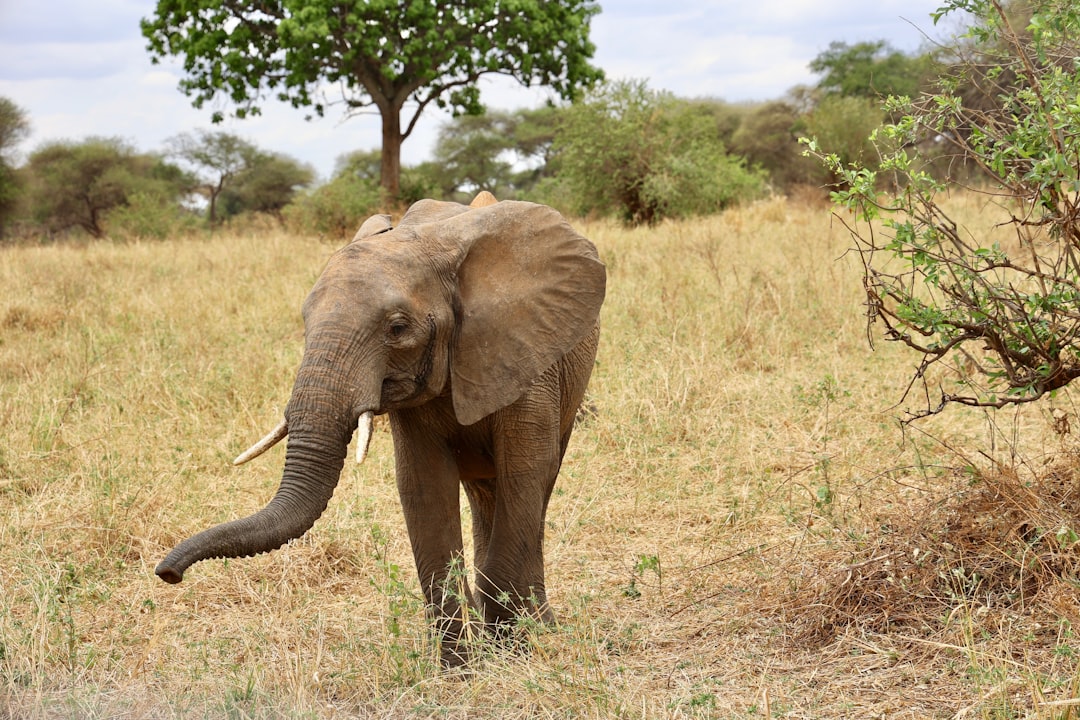
Tarangire's elephant population is the largest of any park in Tanzania and represents one of the most extraordinary dry-season wildlife concentrations in Africa. In September and October — the peak of the dry season when the Tarangire River is at its most critical — herds of 200–300 elephants commonly converge on the river in the afternoon hours. From the terrace of Tarangire Safari Lodge, it is possible on some days to count over a hundred elephants from a single vantage point without moving.
Inside lodges have the clearest advantage for this experience. From the elevated river-view terrace at Tarangire Safari Lodge or the riverbank position at Angata Camp, elephants are often visible drinking and bathing below the camp in the late afternoon. The lodge terrace functions as a game-viewing platform in its own right — guests sometimes watch more wildlife from their sundowner chairs than during a full morning game drive.
At Maramboi, the elephant dynamic is different but equally compelling. Herds move through the wildlife corridor at night, and wake-up calls from camp staff when elephants are close to camp are a genuine feature of stays there. Watching a herd of elephants move silently through camp in the pre-dawn darkness, lit only by starlight, is the kind of experience that defines a trip.
How to Add Tarangire to Your Northern Circuit
The most common northern circuit structure runs: Arusha → Tarangire (1–2 nights) → Lake Manyara (1 night) → Ngorongoro (2 nights) → Serengeti (3 nights) → Arusha. This is a logical route that covers the major parks efficiently, though it requires tight scheduling and minimal flexibility.
Maramboi Tented Lodge offers a useful structural simplification: by staying there instead of at separate Tarangire and Lake Manyara lodges, you use a single base to cover both parks. Manyara is approximately 30 kilometres from Maramboi — a day-trip game drive is entirely practical — and Tarangire's main gate is about 40 kilometres in the opposite direction. The saving on one night's accommodation and one vehicle transfer can be meaningful, and Maramboi's own wildlife corridors, birding, and lake views are a genuine attraction rather than a compromise.
For budget-conscious travellers, the combination that delivers the best value and experience in Tarangire is: one night outside the park at Maramboi (for the lake, flamingos, night drive, and walking) combined with one night inside at Tarangire Safari Lodge or Baobab Camp (for the river views and full immersion). Two nights, two very different experiences, at a combined cost well below two nights inside-park at a premium property.
Booking Tips for Tarangire Accommodation
During peak season (July–October), the small tented camps — Baobab, Angata, Lemala Nanyukie — fill early. Six months ahead is appropriate for these properties. The larger lodges (Tarangire Safari Lodge, Sopa) have more capacity and may be bookable three to four months out during peak, but their best room categories and views go first.
During the green season (November–May), most Tarangire properties offer significant discounts — typically 25–40% below peak rates. Wildlife viewing is still excellent in the shoulder months (November–December, May–June), the park is uncrowded, and the landscape is dramatically different — lush, green, and alive with migratory birds. Many serious wildlife photographers prefer April or May specifically because the combination of low vehicle numbers, rich vegetation, and good light makes for more interesting images than the crowded dry-season circuits.
Combining Tarangire with Lake Manyara is straightforward: the two parks are approximately 40 kilometres apart, making a single itinerary covering both entirely manageable in two to three days. Our complete Tarangire National Park safari guide covers the full park in detail, while our comparison of inside vs outside Tarangire accommodation expands on the trade-offs introduced here. For circuit-wide planning, see our guide to the best time to visit Tanzania on safari.
Ready to Plan Your Tanzania Adventure?
Our local safari experts in Arusha will craft a personalized itinerary just for you. No obligation, free consultation.
Get Your Free Quote